STIs & CIRCUMCISION

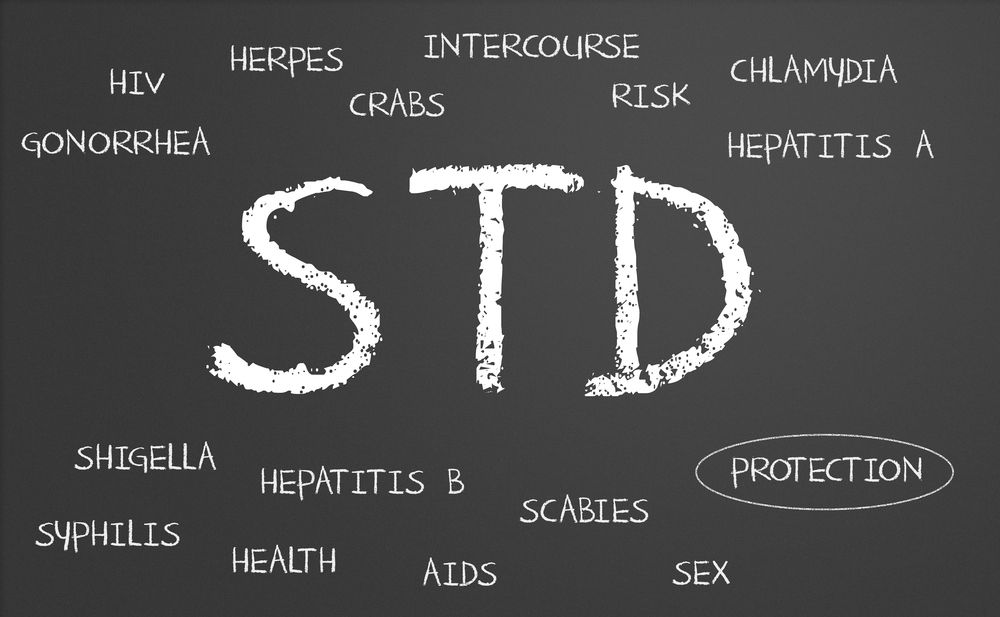
The term “sexually transmitted infections” (STIs), refers to a group of infections that are mainly transmitted via sexual intercourse. Sexually transmitted diseases or infections (STDs/ STIs) affect tens of millions of people. Men and others with willies (penises), such as preop transgender women, may not realize they have contracted an STI because many have no symptoms (asymptomatic). This however doesn’t mean that their health isn’t being affected by that STI.

The 5 most common STIs (excluding HIV) in you, sons of Adam are:
i) CHLAMYDIA;
This STI is caused by bacteria. It is often asymptomatic in the early stages but can cause health problems later. Unprotected sex and unprotected oral sex (blow-job, cunninglingus (AKA mango)), are the main ways a chlamydia infection can be transmitted. NOTE WELL; that penetration doesn’t have to occur to contract it. Giving your genitals are play date together (touching them together) may also transmit the bacteria. It can also be contracted during back door sex (anal sex).
Newborn babies can get this bacteria infection during birth from their mother, this is why most prenatal testing includes a chlamydia test.
If you have been paying attention, I already mentioned that in its early stages Chlam (since you all like unprotected sex so much, might as well give these STIs some cute names) is asymptomatic. If symptoms do appear, it’s usually 1 – 3 weeks after transmission. The most common symptoms will be:
A)Urethritis (infection of the urethra, (the tube that runs through the penis)). This presents as:
i) Burning sensation or pain during urination (dysuria)
ii) Yellow/ green discharge from the penis
iii) Stinging or itching in the urethra
iv) Irritation at the tip of the penis.
B) Epididymitis (infection of a tube at the back of the testicles that stores and carries sperm), presents as pain in the machendes (testicles).
C) Chlam can also affect the rectum, the person experiences:
i) Rectal pain
ii) Discharge
iii) Bleeding.
D) Conjunctivitis (inflammation of the eye) : (rare)

The only good tidings I bring are that Chlam is easy to treat. By nature, it is bacterial so we treat it with antibiotics. The drug of choice is DOXYCYCLINE or AZITHROMYCIN. Alternatively, CIPROFLOXACIN, MOXIFLOXACIN can be used.
AZITHROMYCIN is prescribed in a single large dose whereas DOXYCYCLINE is taken twice per day for 7 days.

To make sure that you do not spread Chlam, avoid having sex for 7 days after a single dose of antibiotics, or until completion of a 7-day course.
ii) GENITAL HERPES;
This is caused by a virus known as the herpes simplex virus and it has 2 types; HSV-1 (usually causes cold sores), and, HSV-2 (usually causes genital herpes). HSV can be found in people’s bodily fluids, including; saliva, semen, and, vaginal secretions.
This one here is very symptomatic as it causes the appearance of blisters which we call an outbreak. A first outbreak appears as early as 2 days after contraction or as late as 30 days afterward. The lesions occur on the glans penis, the shaft of the penis, or other parts of the genital region, on the inner thigh, buttocks, or anus. These lesions can be single or disseminated, painful red bumps or white vesicles. Other symptoms include pain, itching, and burning. Less frequent, but still common is the presence of discharge from the penis, fever, headache, muscle pain, swollen enlarged lymph nodes in the groin area, and malaise.

Treatment can reduce the outbreaks, but it can’t cure them. Depending on the site, and the severity of infection, antiviral drugs are administered either topically or systematically. In cases of recurrent infection, topical and/ or symptomatic treatment is enough. The first-line treatment is oral ACYCLOVIR for mild disease. In severe cases or immunocompromised patients: we give the same Acyclovir but intravenous. VALACYCLOVIR, PENCICLOVIR, FAMCICLOVIR can also be used. Duration:7-10 days.

iii) GENITAL WARTS & HPV (human papillomavirus);
This is a viral infection that’s passed between people through skin-skin contact. Other factors that may put someone at an increased risk for HPV infection include;
–increased number of sexual partners
–unprotected vaginal, oral, or anal sex
–a weakened immune system
–having a sexual partner that has HPV.
HPV is so common that most sexually active people will get some variety of it at some point, even if they have few sexual partners. Some cases may not cause any health problems whilst some may lead to the development of genital warts and in some cases may even cause cancers of the anus, and throat.
Often HPV doesn’t cause any noticeable symptoms or health problems. In fact ,90 % of HPV infections go away on their own within +/- 2 years. When the virus doesn’t go away, this is when it can cause genital warts and warts in the throat known as recurrent respiratory papillomatosis.
Many men who contract it have no symptoms, although some may develop genital warts. It is important to know that some strains of HPV can cause penile, anal, and throat cancer in men. Men who receive anal sex and men with a weakened immune system pose a high risk of developing HPV-related cancers.

There is no treatment for the infection itself. Treatment options for anogenital warts are:
–Routine clinical monitoring
–Local treatment with either: PODOPHYLLOTOXIN, IMIQUIMOD, TRICLOROACETIC ACID, CRYOTHERAPY / SURGERY.
:max_bytes(150000):strip_icc()/genital-warts-101-582005_v2-01-ab942b235a5542fdac9063929f1680ec.png)
iv) GONORRHEA;
It is caused by the bacterium Neisseria gonorrhoeae. It tends to target warm, moist areas of the body, including the: urethra, eyes, throat, anus, vagina. It is passed from person-person through oral, anal, or vaginal sex without a condom or other barrier methods.
Symptoms usually occur within 2-14 days after exposure, some people however never develop noticeable symptoms. The first noticeable symptom in men is often dysuria (burning or painful sensation during urination.) as it progresses, other symptoms may include:
a) greater frequency/urgency of urination
b) a pus-like discharge (or drip) from the penis (white, yellow, beige, or greenish in color)
c) swelling or redness at the opening of the penis
d) swelling or pain in the testicles
e) a persistent sore throat.
/syphilis-09-5ac64896ba61770037c0fd34.png)
If left untreated, it may cause scarring of the urethra, and may also cause a painful abscess to develop in the interior of the penis. It can spread to the bloodstream, causing arthritis, heart valve damage, or inflammation of the lining of the brain or spinal cord.
Modern antibiotics can cure most gonorrhea transmissions. Usually, an injection of CEFTRIAXONE one time to the buttocks and a single dose of AZITHROMYCIN by mouth.

v) TRICHOMONIASIS;
Trich is caused by a one-cell protozoan organism called Trichomonas vaginalis. It travels from person-person through genital contact during sex or from shared sex toys. In men, this infection only happens in the urethra. Once it begins, it can easily be transmitted through genital contact without a condom or other barrier method.
NB: IT CAN’T BE SPREAD THROUGH SEXUAL CONTACT THAT DOESN’T INVOLVE THE GENITALS. This means one can’t contract it from hugging, kissing, sharing dishes, or sitting on a toilet seat.
The risk factors of transmission can increase due to:
–multiple sexual partners
–a history of other STIs
–previous trich transmission
–unprotected sex
The most common symptoms in men are:
a) foul-smelling, frothy, yellow-green, purulent discharge from the urethra
b) burning during urination or after ejaculation
c) an urge to urinate frequently
/trichomoniasis-symptoms-5af1a902ff1b780036862e5a-5dc514d411c94b71a8e0c55ae81f87d4.png)
Tri can be cured with antibiotics. Oral METRONIDAZOLE or TINIDAZOLE.

That sums up the most 5 common STI/Ds in men. In conclusion, better put that rubber on or let your urethra suffer since all these infections seem to have a thing for your urethras. Talk about unreciprocated love! OR if you are clever just get CIRCUMCISED.

Don’t get me wrong, I am definitely not saying that circumcised men get a hallway pass, or that they can insert their willes in every vagina they see and not catch an STI. What I am simply saying is circumcised men are at a lower risk of contracting STI/Ds.
Let us briefly look into circumcision, I mean even the bible says circumcision is a covenant between God and all males, hence the Jews making it a ritual for all males to be circumcised on the 8th day after birth. So ask yourself this question, who are you to refuse?

Circumcision is the removal of the foreskin from the penis. There are many different ways to get this done, the 2 most common ways are; the ring method, and surgical.
Circumcision has various health benefits, including;
i) easier hygiene
ii)decreased risk of urinary tract infections
iii) decreased risk of STIs
iv) prevention of penile problems
v) decreased risk of penile cancer.
Believe it or not, several studies have actually shown that compared with circumcised men, uncircumcised men have a higher risk of contracting STIs like, chlamydia, gonorrhea, syphilis, and pose a lower risk of acquiring genital warts and HPV (by35%) and genital herpes (by 25%).
I mean, at the end of the day, the choice is absolutely yours, but if I was carrying an elephant trunk in my pants, I’d definitely get nicked. My trunk would be as clean as a whistle.
That is all for now elephant trunk holders!

STAY SAFE& SEE YOU SOON!
Excellent web site you have here.. It’s difficult to find excellent writing like yours nowadays. I truly appreciate people like you! Take care!!