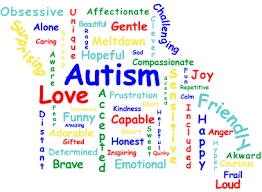
AUTISM SPECTRUM DISORDER (ASD).

Home Health AUTISM SPECTRUM DISORDER (ASD).
AUTISM SPECTRUM DISORDER (ASD).

ASD is a mental condition, present from early childhood, characterized by great difficulty in communicating and forming relationships with other people and in using language and abstract concepts, thus making connecting with others socially somewhat difficult or near to impossible.

Autism isn’t a single condition, but rather encompasses a spectrum of behaviors and characteristics related to how a person senses and interacts with their environment, these are; the previous separate diagnoses of autistic disorder, Asperger disorder, childhood disintegrative disorder, and pervasive developmental disorder-not otherwise specified (PDD-NOS).

Autism_Spectrum_Disorder


As such, it’s typically given the banner term Autism spectrum disorder (ASD) and can include individuals who have extreme difficulty interacting socially and struggle to communicate verbally and non-verbally. It is more common in males than females with a ratio of 4:1. The symptoms which can include heightened sensitivity to everyday sounds or sensations, intense focus on a particular subject, and repetitive body movements such as hand flapping or pacing are typically evident before the ages of 2-3.
While the conditions vary in prevalence across the globe, a study conducted in 2016 estimated on average that autism spectrum disorder (ASD) affected 190 in every 10 000 children from the previous 64 in every 10 000 recorded in 2012.

Signs and Symptoms of High Functioning Autism


Autism was once misunderstood as the result of a lack of motherly love and affection in the 1950s, but today it’s thought that there are a variety of genes that contribute to its characteristics, alongside environmental factors such as toxin exposure, and prenatal infections. NB; no specific causes have been identified as yet.

One of the suspected genes could be UBE3A (provides instructions for making a protein called ubiquitin-protein ligase, these are enzymes that target other proteins to be broken down within cells), which when accidentally copied a few too many times can give rise to isodicentric chromosome 15 syndrome –( a chromosomal disorder that researchers have recently linked with ASD), which results in impaired social interactions, reduced squeaking, and an increase in repetitive behaviors such as grooming. It turns out that having too much UBE3A shuts down members of a family of genes called the cerebellin group, which contributes to the functioning of the connections between nerves called synapses.

On the other hand, those who don’t have the gene develop a condition called Angelman syndrome, which causes developmental disabilities, jerky hand movements, seizures, and increased sociability.

Well-known researcher of autism, George Magruder Anderson and his team found that deleting UBE3A didn’t stop the seizures, but it did remove the consequence of social impairment, this means that having a little extra UBE3A – as some people with ASD have – can result in severe loss of socializing behaviors following mild seizures.
The researchers mapped the location in the brain where UBE3A was being affected by the seizures, finding it in a rather odd location.
Most scientists would have thought they take place in the cortex – the area of the brain where sensory processing and motor commands take place – but, in fact, these interactions take place in the brain stem, in the reward system,” said Anderson.

The exact spot is a group of neurons in the midbrain called the ventral tegmental area, which is known to play a key role in motivation, falling in love, and addiction. Importantly, using engineered receptors that they could plant into the nerves, they found it was possible to switch the nerves on and off, increasing sociability.

The signs and symptoms are subdivided into:

  1. Core features; *Persistent impairment in communication and social interaction (inability to form relationships, abnormal language development, reduced empathy, difficulties in adjusting behavior to social situations, and poor eye contact); *Restrictedstereotyped patterns of behavior, interests, and activities (e.g., hand flapping, excessive touching/smelling, lining up toys, adverse response to sounds, and echolalia)
  2. Additional features; *Intellectual impairment *Language impairment 
  3. Associated conditions; * Epilepsy; *Other neurodevelopmental and psychiatric disorders, e.g; (i) Pica (an eating disorder characterized by the appetite for and ingestion of nonnutritive substances e.g.,hair,cloth,paint); (ii) ADHD (Attention deficit hyperactivity disorder); (iii) Anxiety disorder; *Genetic disorders, e.g., tuberous sclerosis, fragile X syndrome, Rett syndrome ; *Associated with a higher head circumference to brain volume ratio 


Diagnosis
is done in 3 steps:

  (i)Comprehensive evaluation of

  • Social interaction and communication skills
  • Language and comprehension skills
  • Behavior
  • Cognitive development
  • Associated conditions

  (ii)Hearing and vision testing: to rule out comorbidities or other causes of developmental delays and behavioral disorders.

(iii)Genetic testingfragile X syndrome, tuberous sclerosis (if any of these conditions is suspected).

Treatment aims at the management of the symptoms.

  1. Early behavioral and educational management ; *Competence training: social skills, communication skills *Establishing clear and consistent structures
  2. Family support and counseling (e.g., parental education on interaction with the child and acceptance of his/her behavior) 
  3. Medical treatment; *SSRIs: repetitive stereotyped behavior, anxiety *Antipsychotic drugs: aggressionself-injury *Methylphenidate: ADHD

NB: Risperidone and Aripiprazole are FDA-approved for the treatment of irritability in children with ASD.


It might not help every individual on the spectrum, but understanding how our brain gives rise to the variety of characteristics making up ASD could bit by bit provide options for those who find socializing difficult.

REMEMBER, ALL CHILDREN ARE BEAUTIFUL AND NEED ACCEPTANCE.

1,236 Children Holding Hands Circle Stock Photos, Pictures & Royalty-Free  Images - iStock

Leave a Reply

Your email address will not be published.