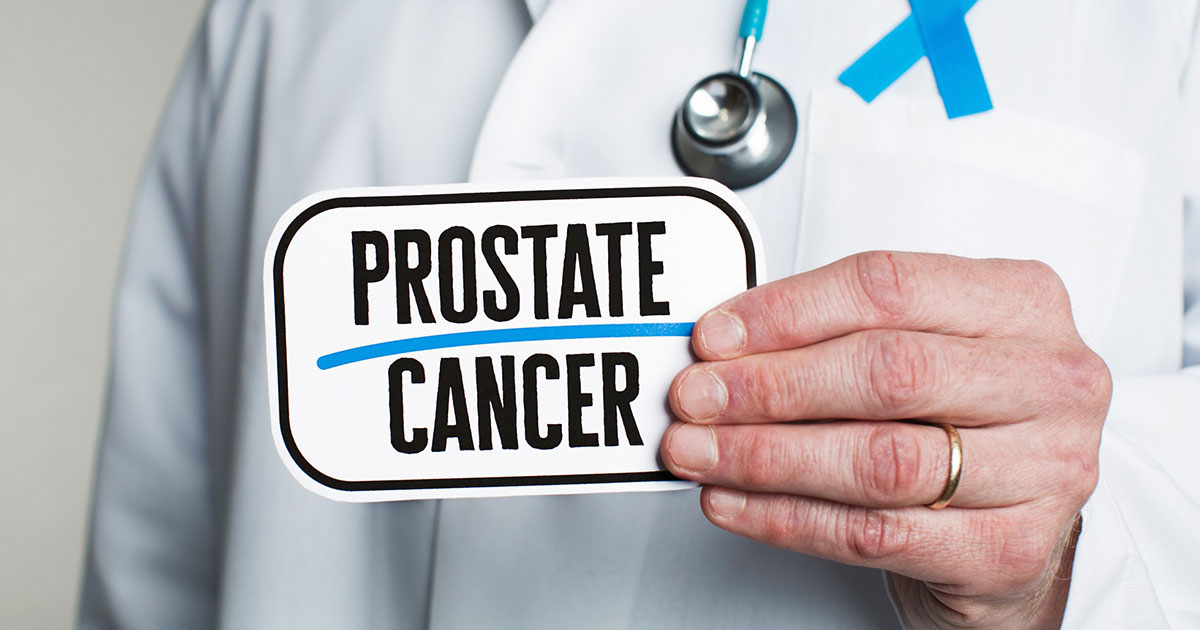
PROSTATE CANCER

Home Health PROSTATE CANCER
PROSTATE CANCER

Before we dive in, let us test the waters by looking at the prostate as an organ first. What is a prostate? The prostate is a small walnut-shaped accessory gland of reproduction located at the base of the bladder and composed primarily of glandular, fibrous, and smooth muscle tissue.

The Prostate Gland - Structure - Vasculature - Lymph - TeachMeAnatomy

Its function is the secretion of:

  1. Components of semen: -Proteolytic enzymes (regulated by DHT) to maintain the fluidity of semen -Acid phosphatase, citric acid, prostaglandins , fibrinolysis, lipids, amylase
  2. Prostate-specific antigen (PSA)

Now let us look into prostate cancer.

Prostate cancer is a form of cancer that develops in the prostate gland.

This cancer is the second most common cancer in men after skin cancer and the second leading cause of cancer-related death in men after lung cancer. The risk of developing prostate cancer increases with age. It is more common in African Americans. In the early stages, prostate cancer generally causes no symptoms and is typically detected by screening.

What Are The Risk Factors for Prostate Cancer?

A) Age
  • As men age, their risk of getting prostate cancer goes up. It is rarely found in men younger than age 40. Damage to the genetic material (DNA) of prostate cells is more likely for men over the age of 55. Damaged or abnormal prostate cells can begin to grow out of control and form tumors.
  • Age is a well-known risk factor for prostate cancer. But, smoking and being overweight are more closely linked with dying from prostate cancer.
B) Ethnicity
  • African American men have, by far, the highest incidence of the disease. One in six African American men will get prostate cancer. African American men are more likely to get prostate cancer at an earlier age. They are also more likely to have aggressive tumors that grow quickly, spread, and cause death. The reason why prostate cancer is more prevalent in African American men is unclear yet it may be due to socioeconomic, environmental, diet, or other factors. Other ethnicities, such as Hispanic and Asian men, are less likely to get prostate cancer.
C) Family History
  • Men with a family history of prostate cancer also face a higher risk of also developing the disease. A man is 2 to 3 times more likely to get prostate cancer if his father, brother, or son had it. This risk increases with the number of relatives diagnosed with prostate cancer. The age when a close relative was diagnosed is also an important factor.
D) Smoking
  • Studies show prostate cancer risk may double for heavy smokers. Smoking is also linked to a higher risk of dying from prostate cancer. However, within 10 years of quitting, your risk for prostate cancer goes down to that of a non-smoker the same age.
E) World Area
  • Prostate cancer numbers and deaths vary around the world but are higher in North America and Northern Europe. Higher rates may be due to heredity, poor diets, lack of exercise habits, and environmental exposures.
F) Diet
  • Diet and lifestyle may affect the risk of prostate cancer. It isn’t clear exactly how. Your risk may be higher if you eat more calories, animal fats, refined sugar, and not enough fruits and vegetables. A lack of exercise is also linked to poor outcomes. Obesity (or being very overweight) is known to increase a man’s risk of dying from prostate cancer. One way to decrease your risk is to lose weight and keep it off.

Risk factors for prostate cancer. | Download Scientific Diagram

Growths in the prostate can be benign (not cancer) or malignant (cancer).

(i) Benign growths (like benign prostatic hyperplasia (BPH):

  • Are rarely a threat to life
  • Don’t invade the tissues around them
  • Don’t spread to other parts of the body
  • Can be removed and can grow back very slowly (but usually don’t grow back)

(ii) Malignant growths (prostate cancer):

  • May sometimes be a threat to life
  • Can spread to nearby organs and tissues (such as the bladder or rectum)
  • Can spread (metastasize) to other parts of the body (like lymph nodes or bone) 
  • Often can be removed but sometimes grow back

Prostate Cancer Staging | Modern Cancer Hospital Guangzhou, China

Prostate cancer cells can spread by breaking away from a prostate tumor. They can travel through blood vessels or lymph nodes to reach other parts of the body. After spreading, cancer cells may attach to other tissues and grow to form new tumors, causing damage where they land. When prostate cancer spreads from its original place to another part of the body, the new tumor has the same kind of abnormal cells and the same name as the primary (original) tumor. For example, if prostate cancer spreads to the bones, the cancer cells in the bones are prostate cancer cells. The disease is metastatic prostate cancer, not bone cancer. For that reason, it’s treated as prostate cancer in bone. Staging is done by either TNM or Gleason scale.

Symptoms;

In its early stages, prostate cancer often has no symptoms. When symptoms do occur, they can be like those of an enlarged prostate or BPH. Prostate cancer can also cause symptoms unrelated to BPH. If you have urinary problems, talk with your healthcare provider about them.

Early-stage prostate cancer

  • Typically asymptomatic
  • Early prostate cancers are found during screening tests. 
  • Some prostate cancers are found incidentally (incidental prostate cancer, e.g., in patients that require a transurethral resection due to BPH)

Advanced-stage prostate cancer

Constitutional symptoms;

  • Fatigue
  • Loss of appetite
  • Weight loss

Urinary symptoms; 

  • Urinary retention 
  • Hematuria 
  • Incontinence 
  • Hydronephrosis (associated with flank pain and renal failure) 

Metastatic disease

  • Bone pain(due to bone metastasis , especially in the lumbosacral spine)
  • Neurological deficits (due to spinal cord compression) 
  • Lymphedema (caused by obstructing metastastes in the lymph nodes ) leading to: 
    1. Swelling
    2. Pain
    3. Redness

Ironwood Urology's Blog | Prostate Cancer Symptoms You Can't Igno

The diagnosis approach to suspected prostate cancer is:

  • Physical examination , including the digital rectal examination (DRE)
  • Measurement of prostate-specific antigen (PSA) levels 
  • In case of suspicious findings/elevated PSA levels: multiple transrectal, ultrasound-guided biopsies to confirm the diagnosis.
  • Staging in case of confirmed prostate cancer to assess disease extent and plan adequate treatment.
  • Screening: this means testing for a disease even if you have no symptoms. The prostate-specific antigen (PSA) blood test and digital rectal examination (DRE)
  • Other blood tests are: Alkaline phosphate and prostatic acid phosphatase
  • Urinalysis and urine culture to rule out urinary tract infection or hematuria.

How Prostate Cancer Is Diagnosed

Some cancers grow so slowly that treatment may not be needed at all. Others grow fast and are life-threatening so treatment is usually necessary. Deciding what treatment you should get can be complex. Talk with your doctor about your options. Your treatment plan will depend on:

  • The stage and grade of cancer (Gleason score and TNM stage) 
  • Your risk category (whether the cancer is low, intermediate, or high risk)
  • Your age and health
  • Your preferences concerning side effects, long-term effects, and treatment goals 

Treatment choices for prostate cancer include:

(a) Surveillance;

  • Active Surveillance
  • Watchful Waiting

(b) Localized Therapy;

  • Surgery
  • Radiation Therapy
  • Cryotherapy
  • Focal Therapy

(c) Systemic Therapy;

  • Hormonal Therapy
  • Chemotherapy
  • Immunotherapy

Can Prostate Cancer Be Prevented?
  • Doing things that are “heart-healthy”, will also keep your prostate healthy. Eating right, exercising, watching your weight and not smoking can be good for your health and help you avoid prostate cancer.
  • Some doctors believe drugs like finasteride (Proscar ®) and dutasteride (Avodart ®) can prevent prostate cancer. Others believe they only slow the development of prostate cancer. Studies do show that men taking these drugs were less likely to be diagnosed with prostate cancer. Still, it is not clear if these drugs are effective so you should talk to your doctor about the possible side effects.

That is all for now. Please remember to share, like all my platform pages, and leave a comment down below.

STAY SAFE & MASK UP!

Put On A Mask GIFs - Get the best GIF on GIPHY

Leave a Reply

Your email address will not be published.