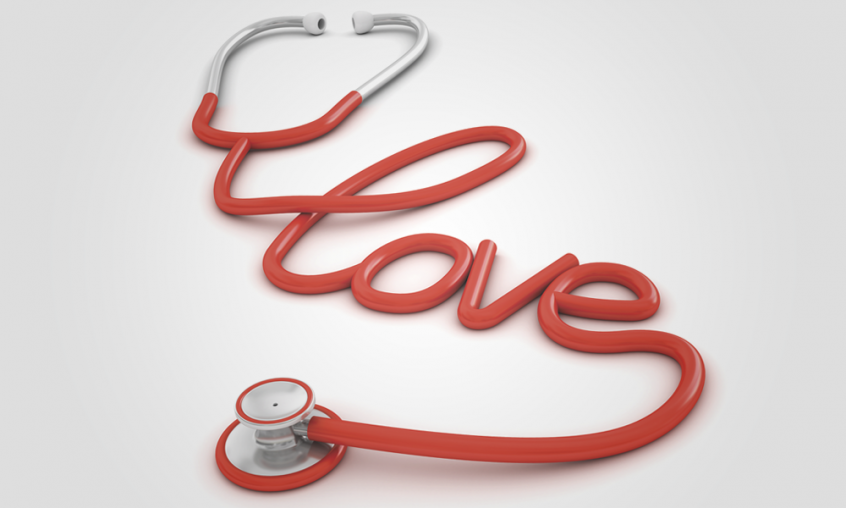
Seeing as February is known as the “Month of Love,” I thought it befitting to discuss the impact of love on our health and well-being.
In my opinion, regardless of language, culture, or ethnicity, the word love is the second most popular word. According to the Oxford English Dictionary, “love” is defined as “a strong feeling of affection” or “a great interest and pleasure in something.”
I like to think of love as a verb. Given that verbs are action or doing words, to me it means that love is what you do especially on days where you can’t be bothered to, maybe after an argument, or because the weight of the world is on your shoulders. It’s in those trying times that love should be best portrayed. True or genuine love isn’t shown when things are smooth or everything is easy going, in my understanding, it is meant to be shown when things are hard and times are challenging. To me, I choose to love, I choose to show affection, I choose to care, I choose to forgive, I choose to appreciate, meaning, I am consciously or unconsciously acting or doing. I can further state that “love” is a choice rather than an emotion. However, I am not here to give a lesson on what love is as I am not a love guru, I will just stick to what I know which is looking at love from a medical standpoint.

It is critical that we remember “our body is like a machine made up of different operating systems and one major “boss,” the brain.” The hypothalamus, which is located in the brain, is the center of hormone production. The main neurochemicals responsible for the sensation of love are secreted here. These are:
- Dopamine (also known as the ‘feel good hormone’)
- Norepinephrine
- Phenylethylamine

Other minor contributors are:
- Testosterone
- Oestrogen
- Oxytocin
- Vasopressin
Let us now have an in-depth look at the neurochemicals responsible for the sensation that makes 89% of the world go crazy every February 14.
- Dopamine
Helen Fisher, a well-known American anthropologist, had newly ‘love struck’ couples’ brains examined, and it was discovered that they had very high levels of the neurotransmitter dopamine. Dopamine stimulates ‘desire and reward’ by causing an intense rush of pleasure, which is why it is also known as the ‘feel-good hormone.’ This has an indirect effect on the heart because the intense rush of pleasure causes a rapid increase in heart rate, increasing the rate at which blood flows throughout the body. Tachycardia occurs when there is an abnormally rapid increase in heart rate, such that the number of heartbeats per minute exceeds 120 beats per minute. This rapid increase in heartbeat is most likely why the heart is referred to as the “organ of love.”
As I previously stated, love can also be objective. This means that it is not limited to people or animals, but can also be associated with colors, machines, clothing, buildings, foods, and so on. When you see something you are fond of, the neurons in your brain release Mr feel-good, causing you to feel euphoric. And, because your brain wants you to keep pursuing this sensation, more of it is released every time you think of or see the thing you like immensely. Dopamine secretion can result in relief of:
- stress
- headache
- tension
- depression
- sadness
and in some cases, it triggers a sense of:
- belonging
- responsibility
- being wanted, (which causes a boost in mood)
- self-worth
- confidence
It also aids with the following:
- increase in concentration
- pro-social effect,
- excretion of sodium
- reduction of insulin levels
- protection of the gastrointestinal tract
- improves immune function

2. Norepinephrine
Have you ever noticed how you get extremely nervous before a date? Or when you think of something that makes you somewhat uncomfortable, you get sweaty palms, your heart races, and there is a spontaneous surge of adrenaline throughout your body? This is because signals are being sent by the brain to the adrenal gland (located on top of the kidneys) to pump out chemicals (adrenaline, epinephrine, and norepinephrine) giving you a rush of excitement.
Norepinephrine, like dopamine, makes us ‘feel good,’ but it also makes us feel infatuated and obsessed. This is our brain telling us to keep going, (like that evil little voice whispering in your ear, more, moree, I want moreee). Suddenly 98% of the time, all you want now is to be around this thing you’re newly obsessed with. So, basically, the brain has decided that love is essential and that it wants more of it; this is the limbic reward system.

3. Oxytocin and Vasopressin
The more time we spend with our muse or object of affection, the more oxytocin, also known as “the love hormone,” is released. Ms love hormone (oxytocin) is produced in the hypothalamus and released during intimate moments, such as when mothers breastfeed their children. Eating chocolate also promotes the secretion of oxytocin subsequently inducing a pleasurable feeling. According to studies, oxytocin is responsible for fostering trust and commitment. In comparison to the impulsive effect of dopamine, oxytocin is more subtle and lasts longer, leading to a sense of deeper attachment.

When deep companionship develops, there is increased activity in the ventral pallidum (a structure within the basal ganglia of the brain). Oxytocin and vasopressin are found in high concentrations here and are associated with lifting people’s spirits. At this stage, brain scans show that the limbic reward system (of dopamine) is still active, implying that the initial rush of feelings of acquaintance is combined with those of deep attachment.

So far, we have only seen the positive side of these neurochemicals, don’t let them fool you! Remember there are always two sides to every story. Having too much or too little of these can pose negative effects such as:
a) Anxiety
When dopamine levels rise in certain parts of the brain, some people may become more anxious. This could be due to dopaminergic receptor dysfunction. This is why, in general, dopamine reuptake inhibitors make some people with anxiety disorders feel more anxious (DRIs).
b) Agitation
Those with high dopamine may feel internally restless and overstimulated. While adequate dopamine levels can help some people stay calm, abnormally high levels can cause a person to feel internally nervous and knotted.
c) Hedonism
When dopamine levels become excessive, many people experience a sense of hedonism or pleasure-seeking behavior. Hedonistic behaviors can be displayed by both those with low dopamine (as a means of increasing it) and those with high dopamine (due to the feeling of intense pleasure).
d) High libido
It is well known that increasing dopamine levels are associated with increased sex drive and sexual pleasure. This is why many people use stimulants and drugs with stimulant properties, such as MDMA, to increase pleasure during sexual intercourse. Even medications that cause only minor dopaminergic increases (e.g., Wellbutrin) can cause hypersexuality and counteract a decrease in sex drive caused by high serotonin.
e) Hyperactivity
When dopamine levels are high, some people become hyperactive (not to be confused with inattentive). The hyperactivity could be a side effect of the constant pleasure-seeking behavior associated with dopamine elevations. Some people find it difficult to sit still due to high dopamine levels (counterintuitive to most ADHD diagnoses).
f) Insomnia
Excess dopamine may make falling asleep difficult, resulting in insomnia. Dopamine deficiency is linked to lethargy and chronic fatigue. Sleeping problems and insomnia have been linked to drugs that increase dopamine levels in the brain.
g) Learning
High levels of dopamine in certain areas of the brain may improve our ability to learn new things. Those with low dopamine levels have a difficult time maintaining motivation to put forth sustained effort to learn something new, leading to learning difficulties because they are unmotivated.
h) Mania
Elevations in dopamine may contribute to mania or hypomania in some people. Mania is distinguished by a decreased need for sleep, feelings of happiness, talkativeness, social behavior, impulse behavior (e.g., shopping sprees), and other characteristics. Hypomania is thought to be a milder form of mania. With an increase in dopamine, both conditions may worsen or become triggered.
i) Paranoia
Paranoia is associated with increased levels of extracellular dopamine in the brain. Those suffering from conditions such as paranoid schizophrenia and paranoid personality disorder frequently have issues with the number of dopaminergic receptors. Drugs that reduce dopamine are frequently used to treat paranoia. Even those who do not have psychiatric conditions can develop paranoia as a side effect of using certain drugs to increase dopamine levels.
j) Reward seeking
You’ll be more likely to seek out gratification in the form of sex, money, food, and possibly drugs. While temporary dopamine increases are a side effect of rewarding stimuli, chronic dopamine elevations may make you more likely to seek these rewards for a greater sense of pleasure. As a result, reward-seeking behavior may increase, which is the inverse of reward deficiency syndrome (RDS).
k) Stress
High levels of stress, such as those associated with a nervous breakdown, may result in increased dopamine production. The sympathetic nervous system, which detects “danger,” produces this dopamine. Dopamine also stimulates the release of adrenaline, making you feel more alert and less relaxed. Excessive stress, on the other hand, is associated with dopamine depletion or “burnout.”
l) Schizophrenia
Overproduction of dopamine has a strong influence on certain subtypes of schizophrenia. When a person has positive symptoms of schizophrenia, such as hallucinations and delusions, there is an excess of dopamine and dysfunction in the mechanisms that process it. This is why people with schizophrenia are given antipsychotic medications that purposefully lower dopamine levels.

Now that we have looked at how both ends of the chemical spectrum. Let us see how we can fix an overload of them.
Those who have an excess of dopamine and believe that it is a problem have several treatment options they can explore. Eliminating stimulants and increasing serotonin production is a common way to reduce the effect of dopamine in people who do not have a mental illness. Taking an antipsychotic is generally accepted among people with mental illnesses (https://doctortanaka.com/a-look-into-mental-health/) as a way to reduce the potentially harmful effects of high dopamine.
i) Antipsychotics
These are a type of psychiatric medication used to treat schizophrenia and psychosis. They are occasionally used to treat bipolar disorder and certain types of major depression. They are highly effective dopamine depressants, but they come with a number of risks and side effects. As a result, they should only be used by people who have psychiatric conditions that require them.
ii) Dietary intake
Eating foods that increase serotonin (e.g., carbohydrates) may help to offset the effects of high dopamine levels. Caffeinated beverages (e.g., coffee or tea) and foods high in L-Tyrosine (a dopamine precursor), such as dark chocolate, duck, oatmeal, cheese, and chicken, should be avoided.
iii) Supplements
Some people believe that taking supplements that boost serotonin will naturally counteract the effects of high dopamine levels. A list of some supplements is provided below:
- 5-HTP
- L-Tryptophan
- Melatonin
- St. John’s Wort
My closing remark for this post is, are you genuinely in love, or, your brain is playing a number on you……???

PS: I am not to Valentine’s Day what the Grinch is to Christmas…

Leave a comment